Cousin Sasha is in town and to take advantage of the beautiful weekend weather we visited a certain public park on the bank of the Potomac to have ourselves un asado tipico Argentino. Only, this being Gringolandia, we grilled pork ribs along with our morcilla.
Ms Vidal and I made a careful study of Argentine barbecue during our residence in Buenos Aires. The principal differences between ours and theirs are these:
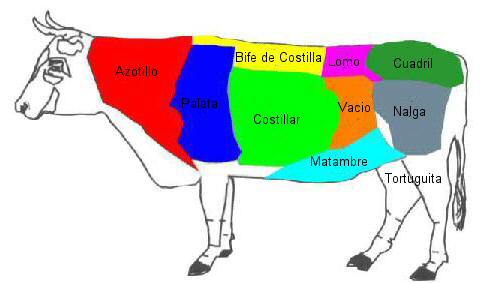
1. Argentina is a superlatively carnivorous society. During a recent government-mandated increase in beef prices one woman lamented to the press, "My 31 year old son Rodrigo lives with me. I fear that he will starve. What am I supposed to feed him, chicken?" Truly, chicken, pork, fish and anything else that doesn't have magenta colored flesh are all considered a separate class of flowering plants. The reason for this is simple: Argentina's vast, unpopulated countryside is home to the world's largest migratory population of prime-grade free-range beef, though rampant soy-speculation and an unprecedented drought have severally denigrated the living conditions of the bos felix argentinus. Despite this, Argentines still cling tightly to their traditional bovicentric way of life. Although prices fluctuate, the value of Argentine beef as measured in quality/cost remains among the very highest in the world. What would be sold in Chicago as extraordinarily fine prime-grade sirloin is a relatively common piece of meat to Argentines. Argentine beef cuts vary enormously from those practiced by American or British butchers, and contrary to the Northern predilection for aged beef, the Argentines try to keep the time between slaughter and grill to a minimum.
2. While Ms Vidal and I cherish the regional and even county-to-county varieties of American barbecue, which Lo Paisan considers to be the first, if not finest, American culinary invention, the parameters of our consciences were shattered by the revolutionary aspect of Argentine barbecue. The asado is typically a private affair, done on a (relatively) small scale in parks, back yards, campgrounds, or the grassy median between directions of traffic on the highway. The method requires absolute simplicity. Meat, salt and wood are the only requirements. Wood is burned into coals in a separate fire and a few, small, smoking embers are arranged beneath the grill. The meat, often accompanied by a variety of sausages and offal, is adorned with nothing more than coarse salt, if salt is used at all. The fire is kept going and new embers are continually added as the old ones grow cold, until the flesh, self-basted in its own slowly rendered fat, reaches a tender, smoky medium rare. It is a method dependent on time, which necessitates time together, which necessitates close and amiable relationships built on patience, trust, and a love of food. Perhaps in a country with as unstable a political history as Argentina's the asado has become so deeply embedded in society because it produces clans -- groups of trusted friends outside the sweep of politics, like moonshiners or fishing buddies -- unified over the shared consumption of blood, smoke and salt.
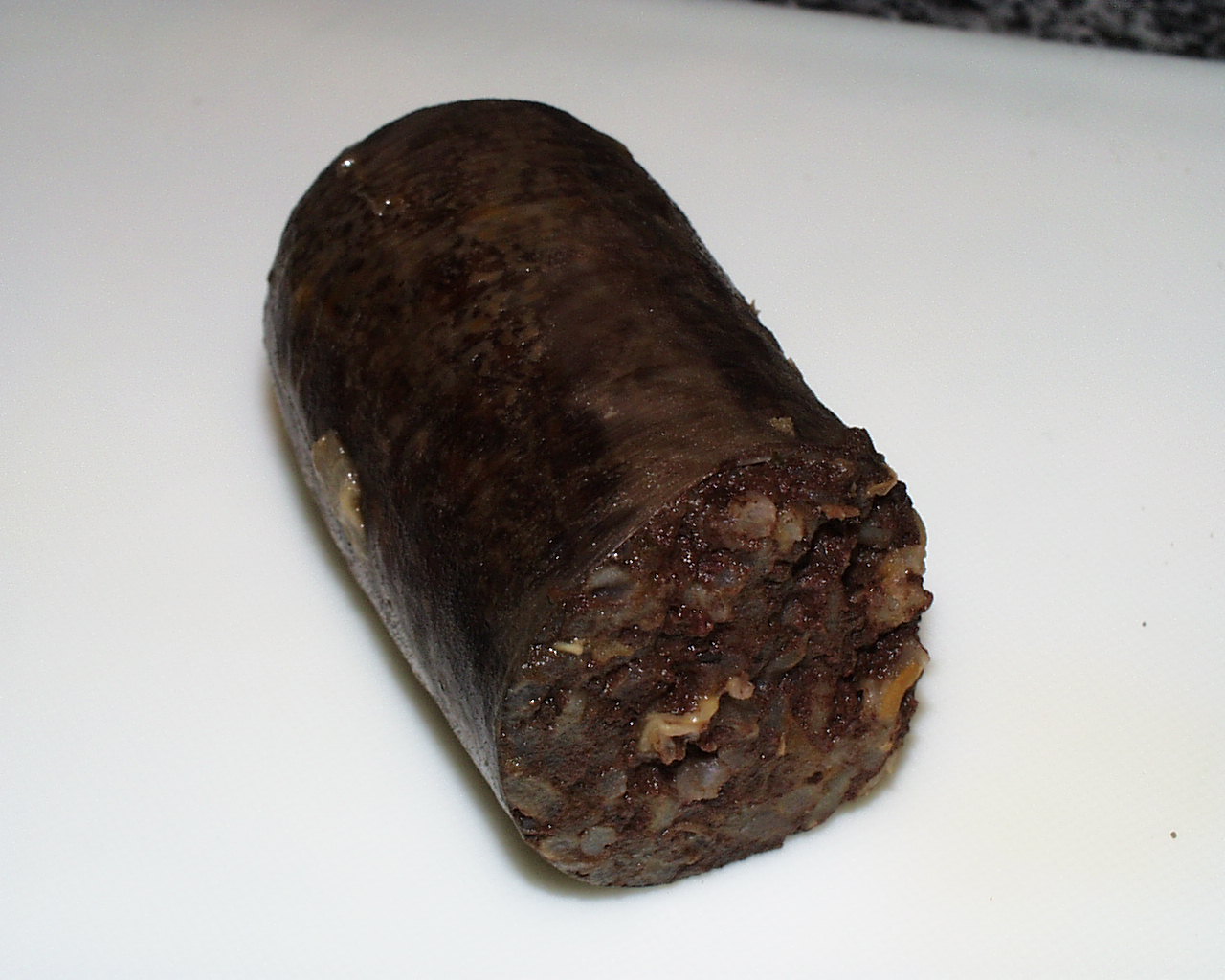
Sasha and I stopped at Eastern Market for a slab of pork ribs, bought at around $2.00 a pound from the geniuses at Union Meat Company, a couple of morcillas from Canales Quality Meats, and a baguette. With a magnum of Georges Duboeuf's cuvée rouge safely stowed in the bota bag, a jar of kosher salt and a bundle of split pine, we made our merry way to our paradisaical riverine asado. The ribs turned out wonderfully. The morcipan, the first I've had in nearly two years, were delicious, but had a tangy, tannin-like, granulated taste like no morci I ever et in Argentina. Sated, we returned with several smoky flame-browned ribs.
The following night, unsure what to prepare for a starving Ms Vidal, I decided to try my hand at caçolet paisan -- the left over ribs stewed in white beans. I fried two minced onions and two minced carrots in the cast iron while the great northern beans came to boil, then added the ribs to the skillet with the penultimate tablespoons of the fresh garden thyme that came in the mail last Christmas, along with some whole peppercorns. I let these cook slowly while the beans, once at a boil, rested with the burner off their proscribed thirty minutes. Once that time had passed, I scooped the contents of the skillet into the beans, along with some ketchup, mustard and red wine vinegar and brought the lot back to a boil. An hour later Ms Vidal's hunger had overcome her patience so, the beans being just tender enough to be palatable, we ate a nice pork and white bean soup. I continued to cook the remaining beans, however, as I wanted to carry my experiment in caçolet paisan to its enviable conclusion.
The following evening, I removed the rib bones and stray pieces of cartilage from the beans and poured the still soupy mixture into the cast iron skillet, brought it to a boil over a flame, then coated the top with a generous application of paprika and olive oil, and put the skillet in the broiler. Four times I let the surface brown and develop a membranous, paprika flavored crust. Four times I broke the crust with gentle admonitions of a wooden spoon, gently separating the beans from the sides of the skillet, until, after the fifth browning, the beans possessed a lovely brown crust under which the beans still sopped in the concentrated juices of the soup.
While a proper cassoulet, containing at least one duck, several pounds of meat and various sausages, is indubitably superior to caçolet paisan, yesteray's version, prepared off the cuff with leftover ribs, two onions, two carrots and a bag of beans, made for a delicious and satisfying meal.